Saturday, December 25, 2010

ISRO GSLV Mission Fails

ISRO GSLV Launch Dec 25, 2010

Image Credit RIA Novosti

GSAT-5P Satellite launch fails
Image Credit: IBN Live

Indian Space Research Organisation (ISRO) launched GSLV-F06 earlier today at 4.04 p.m. IST but at approximately 47 seconds after lift off, the rocket deviated from its path when the gimbal steering system failed and the rocket exploded several seconds later as the GSLV reached an altitude of approximately 12 km and 4.5 km down range and fell into the Bay of Bengal.


This is the third unsuccessful launch in seven launch attempts of the ISRO GSLV. The launch of GSLV-D3 on April 15, 2010 failed due to a fuel pump anomaly on its cryogenic third stage. The launch of GSLV-F02 on July 10, 2006 failed.


GSAT-5P Satellite launch fails
Image Credit: IBN Live

GSAT-5P Satellite launch fails
Image Credit: IBN Live

GSAT-5P Satellite launch fails
Image Credit: IBN Live
GSAT-5P Satellite launch fails
Image Credit: IBN Live
GSLV-F06 Launch Failure Dec 25, 2010
Image Credit: Xinhua News 

GSLV-F06 Launch Failure Dec 25, 2010
Image Credit: Xinhua News 

Friday, December 24, 2010

JAXA H-IIB with H-II Transfer Vehicle 2 (HTV2) to launch January 20

JAXA is scheduled to launch its H-IIB Launch Vehicle No. 2 with H-II Transfer Vehicle 2 (HTV2) on January 20, 2011 at 3:29 p.m. (JST) from Tanegashima Space Center.


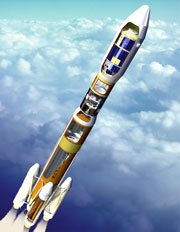
H-IIB Launch Vehicle No. 2 (H-IIB F2)
at the Tanegashima Space Center
Image Credit JAXA
A sucessful cryogenic test of the H-IIB Launch Vehicle No. 2 (H-IIB F2) was conducted at the Tanegashima Space Center on December 16, by JAXA and Mitsubishi Heavy Industries Ltd. 


H-IIB Launch Vehicle
Image Credit JAXA
H-IIB Launch Vehicle
Height: 56.6 m
Mass 531 t
Inertial Guidance
First stage: 
     LE-7A LOX/LH2 with 2,196 kn thrust  - Gimbal attitude control
     four Solid Rocket Boosters (SRB-As) using Polybutadiene composite solid propellant with 9,220 kn thrust

Second Stage: 
     LE-5BLOX/LH2 with 137 kn thrust - Gimbal gas jet attitude control system


Large image at:

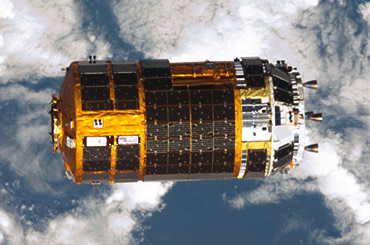
H-II Transfer Vehicle 2 (HTV2)
named KOUNOTORI 2
Image Credit JAXA

H-II Transfer Vehicle 2 (HTV2) named KOUNOTORI 2
Image Credit: NASA
H-II Transfer Vehicle 2 (HTV2) named KOUNOTORI 2 is an unmanned cargo transporter to the International Space Station) has been thoroughly inspected, and propellants loaded. Battery charge and loading on to H-IIB Launch Vehicle No. 2 remain before launch.

  • Scheduled date of launch: January 20 (Thursday), 2011 (Japan Standard Time, JST)
  • Launch time: ~ 3:29 p.m. (JST)
  • Launch windows: January 21 (Fri.) through February 28 (Mon.), 2011 (JST)
  • Launch Site: Yoshinobu Launch Complex at the Tanegashima Space Center


"The best environment where human beings can exhibit their utmost ability is in relaxed conditions with a comfortable level of tension against carelessness." - Yoshihiko Torano / JAXA HTV Project Manager


References:


ISRO to Launch GSAT-5P on December 25, 2010 from Satish Dhawan Space Centre in India

GSAT-5P
Image Credit ISRO
Indian Space Research Organisation (ISRO) is scheduled to launch GSAT-5P on December 25, 2010 from launch pad number 2 at Satish Dhawan Space Centre on a GSLV-F06 geosynchronous satellite launch vehicle. GSAT-5P is an advanced communications satellite to replace its INSAT-2E for telecommunication, television and meteorology services and will expand existing telecommunication and television bandwidth.


GSAT-5P

  • Fifth in the GSAT series
  • Developed by the ISRO Satellite Centre in Bangalore
  • C-band communication satellite
  • 12 normal C-band transponders
  • six extended C-band transponders
  • scheduled launch Dec 25, 2010
  • mass 2,310 kg
  • mission life 12 years


GSLV Image Credit: ISRO

Geosynchronous Satellite Launch Vehicle (GSLV)

  • Height: 49 m
  • lift off weight: 414 tonne 
  • maximum diameter of 3.4 m at the payload fairing. 
  • First stage comprises S125 solid booster with four liquid (L40) strap-ons. 
  • Second stage (GS2) is liquid engine
  • Third stage (GS3) is a cryo stage. 
  • Lift off thrust of 6573 kn. 
  • Payload range: 2000 – 2,500 kg

INSAT-2E
Image Credit ISRO


INSAT 2E
  • launched by Ariane-42P launch vehicle (Ariane 4 with two solid-fuel boosters) of Arianespace from Kourou, French Guyana on April 3, 1999 at 3.33 am IST
  • last satellite in the second genaration INSAT-2 series built by ISRO
  • Geostationary Orbit at 83 degree East Longitude
  • 440 nt thrust Liquid Apogee Motor (LAM) built by Liquid Propulsion Systems Centre, Thiruvananthapuram
  • perigee 32,100 km
  • apogee 35,925 km
  • inclination to equator 0.15 deg
  • orbital period ~ 22 hours 27 minutes
  • continuously remains within the radio visibility of INSAT Master Control Facility at Hassan in Karnataka


Image Credit ISRO


References:

Indian Space Research Organisation (ISO) http://isro.org/

Wednesday, December 22, 2010

Space shuttle Discovery is back in the Vehicle Assembly Building

Space Shuttle Discovery
STS-124 Launch May 31,2008
External tank is bright orange
Photo credit: NASA
Space shuttle Discovery is back in the Vehicle Assembly Building (VAB this morning Tuesday December 22, 2010. There was a crawler problem that delayed move from Launch Pad 39A until late last night (10:48 p.m. EST).  The problem with the crawler was a sensor in the crawler level control system.

While in the Vehicle Assembly Building, the shuttle's external tank will be radiographed to look for cracks in all 108 stringers. Sensors from the recent tanking test will be removed and foam reapplied. A decision is expected next week (December 30)  by NASA project managers on a possible engineering modification to install stiffeners on 36 stringers in the external fuel tank.

Mike Moses, NASA Space Shuttle Program Launch Integration manager, said the results from the tanking test on December 17, 2010 looked good although it would take a few weeks to fully analyze them.

A launch attempt on November 5, 2010 was scrubbed a hydrogen leak was found on the Ground Umbilical Carrier Plate (GUCP) which is an attaching point between the external tank and a ventilation pipe for a  7 inch quick disconnect. Cracks in foam led to discovery of cracks in the tops of two stringers. Repairs were made. No leak at the GUCP was detected during the December 17 tanking test. The space shuttle external tank has a capacity of 535,000 gallons of liquid oxygen (LOX) and liquid hydrogen (LH2). Liquid oxygen is boiling point is 90.19 K (−297.33 °F, −182.96 °C). Liquid hydrogen boiling point is −252.87 °C (−423.17 °F, 20.28 K).

Space Shuttle Discovery in the Vehicle Assembly Building
December 22. 2010 after completing 3.4 mile roll back from Launch Pad 39A. Photo credit: NASA TV

Cutaway diagram of the space shuttle
external fuel tank showing the stringers


References:


http://www.nasa.gov/mission_pages/shuttle/main/tankingtest.html


http://mediaarchive.ksc.nasa.gov/detail.cfm?mediaid=36289


http://www.nasa.gov/mission_pages/shuttle/shuttlemissions/sts133/multimedia/gallery/gallery-index.html

http://www.nasa.gov/centers/marshall/multimedia/photogallery/photos/photogallery/shuttle/shuttle.html

http://www.nasa.gov/mission_pages/shuttle/main/


Cracked foam on external tank during fueling
operations  November 5, 2010 caused by cracking
in top of two of 108 vertical stringers
Photo credit: NASA
 cracks were on two of the 108 stringers


Tank repairs to the GUCPPhoto credit: NASA
Removing vent line at the GUCP during external tank repair
Photo credit: NASA


Removing vent line at the GUCP during external tank repair
Photo credit: NASA


External Fuel Tank with sensors attached 

for tanking test on December 17, 2010.
Photo credit: NASA


Sunday, December 19, 2010

Robonaut 2 will be the First Human-like Robot in Space

Image Credit: NASA

Robonaut 2 or R2 will be the the first human-like robot in space when the Leonardo Permanent Multipurpose Module (PMM) is launched with STS-133 no earlier than 3 February 2011. R2's systems and control functions will be the first human-like robot demonstrated in near-zero gravity. Robonaut 2, was developed through a Space Act Agreement jointly by NASA and General Motors as a robotic assistant that can work along side humans, whether they are astronauts in space or workers at GM manufacturing plants on Earth. R2 will be the first human-like robot to move its head and stretch its arms in microgravity. R2 consists of a head and a torso with two arms and two hands. Each arm fully extended can apply ~89 nt or ~ 20 lbf, Each finger can apply a force of ~22.2 nt or ~5 pounds. After being unpacked, it will initially R2 will be anchored in one place in the Destiny Laboratory on the ISS for operational testing. It has been ground tested to ensure it does not emit interfering electromagnetic radiation (called EMI or electromagnetic interference) with near by electronics Its materials meet stringent flammability requirements. It has been shake tested for launch conditions. Its cooling fans are very low noise emitters and it has been tested to ensure it is not too loud and not a noise distraction for ISS crew members. It runs on DC power.


Mass: 150 kg
Materials: Nickel-plated carbon fiber and aluminum.
Height: ~ 1 m(from waist to head
Shoulder width: ~0.788 m
Arm span: ~2.44 m
Sensors: 350+, total
Processors: 38 Power PC Processors located in its stomach torso region
Power requirement: 120 Volt DC
54 Servo Motors 
External control: ISS crew or ground control initiation of autonomous tasks with pre-programmed self checks.
Cameras:

  • four visible light cameras behind its visor - two for stereo vision, plus two auxiliary 
  • infrared camera housed in mouth area for depth perception
Degrees of freedom: 42, total with
  • 3 degrees of freedom in its neck, allowing it to look left, right, up, or down 
  • 7 degrees of freedom in its arms 
  • 12 degrees of freedom in its hands 
  • 4 degrees of freedom in the thumb 
  • 3 degrees of freedom each in the index and middle fingers 
  • 1 each in the ring and pinky fingers

Once its demonstration capabilities have been proven inside the station, software upgrades and lower bodies can be added, potentially allowing Robonaut 2 to move around inside the station doing mundane tasks such as cleaning filters and vacuuming and eventually working outside the ISS.

Robonauts may one day be performing EVA tasks on the ISS or in other missions such as satellite servicing. Robonauts have a future in comet and NEO exploration such as sample surveys and mapping projects, solar system missions, or Mars and Lunar landings leading the way for humans.


Robonaut2 or R2 manipulating a 20-pound weight
Image Credit: NASA


Robonaut 2 robots were designed to use the same tools as humans.

Image Credit: NASA
Chris Ihrke, senior project engineer for General Motors,
works with R2 at Johnson Space Center.

Image Credit: NASA
Robonaut2 and STS-133 crew members
in front of Destiny lab trainer

Image Credit: NASA

 the Permanent Multipurpose Module in the Space Shuttle
 Discovery Cargo Bay which is packed with
supplies,critical spare parts, as well as Robonaut 2


Future exploration possibilities
Image Credit: NASA

Remember Captain Pike from Star Trek. He could be coming to a space station orbiting your planet soon.


NASA to launch R2 to join Space Station Crew
Image Credit: NASA

References:

NASA Press Kit October 2010 Expedition 25 and 26 A New Decade Begins: http://www.nasa.gov/pdf/488923main_exp25_26_press_kit.pdf

Robonaut2, the Next Generation Dexterous Robot:
http://www.nasa.gov/topics/technology/features/robonaut_photos.html

NASA Robonaut2 Fact Sheet: http://www.nasa.gov/pdf/464887main_Robonaut2FactSheet.pdf

NASA, GM Take Giant Leap in Robotic Technology: http://robonaut.jsc.nasa.gov/default.asp

NASA to Launch Human-Like Robot to Join Space Station Crew:
http://www.nasa.gov/topics/technology/features/robonaut.html

Friday, December 17, 2010

Soyuz TMA-20 Docks with ISS - December 17, 2010

Soyuz spacecraft docked to the Rassvet  Module
The Soyuz TMA-20 with three person crew including NASA's Cady Coleman, Russian Dmitry Kondratyev and Italian Paolo Nespoli docked with the Rassvet module of the ISS at 20:11 UT on 17-December-2010. The docking occurred over western Africa at an altitude of 386 km. The Soyuz docking probe then retracted to allow hooks and latches to bring the spacecraft to a firm seal with the station. The three new Expedition 26 residents join station commander Scott Kelly, Alexander Kaleri and Oleg Skripochka.


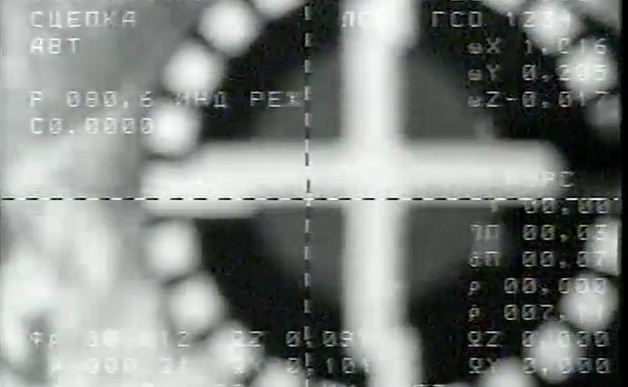
The Soyuz completed a roll maneuver and a station flyaround before aligning with the docking port and energuzed its headlight headlight to illuminate the docking module. The docking was live on NASA-TV with images provided by a monochrome camera of the automatic docking. The automated docking system is a radar-based system  to maneuver towards the station for docking.  


Docking alignment

Closing in


Very close

Docked


Final ISS configuration


SOYUZ TMA-20 Mission Patch

SOYUZ TMA-20 crew:
Catherine ColemanNASA
Dmitri KondratyevRoscosmos
Paolo NespoliESA
References:

Thursday, December 16, 2010

JAXA IKAROS Update - December 16, 2010

IKAROS health check. Data recorder playback data. And just made a little spin down.
IKAROS sending data recorder information in trickles.
IKAROS and Akatsuki take turns with data transmission

As the distance and become even weaker signal strength received at the Usuda station
Earth is gradually becoming sideways to sail
Next IKAROS update is Saturday Dec 18, 2010 at 8.am. JST


IKAROS 12/16
Solar Distance: 0.72AU
Earth Distance: 0.51 AU  (76417494 km), RA =- 142.6 °, declination =- 11.4 °
Venus Distance: 0.02 AU (2285579 km)
Attitude: spin rate = 2.3 rpm, sun angle = 13.3 deg


References: 
http://twitter.com/ikaroskun
http://www.isas.jaxa.jp/home/IKAROS-blog/


JAXA IKAROS Solar Sail Deployed
http://www.jspec.jaxa.jp/activity/ikaros.html
Image Credit: JAXA